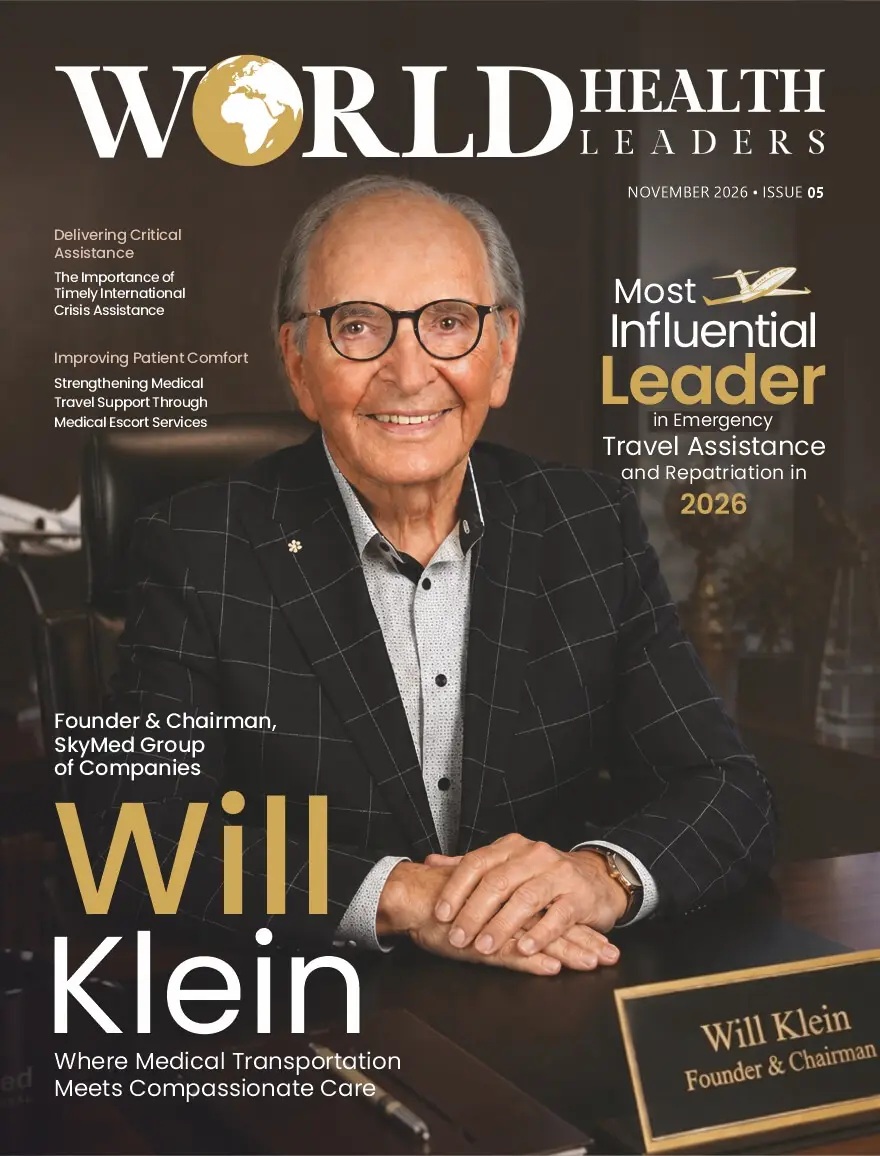
In healthcare, innovation is often measured by advanced technologies, clinical breakthroughs, and new treatment models. Yet some of the most consequential innovations begin with a simpler act: recognizing a human need that has been overlooked.
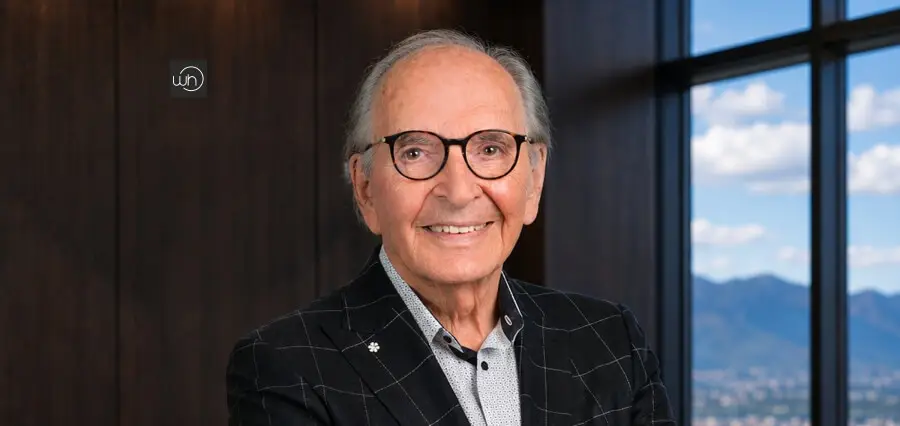
For Will Klein, Founder & Chairman, SkyMed Group of Companies, that need appears at the moment a traveler becomes a patient. A serious illness or injury far from home can leave families facing an unfamiliar healthcare system, complex transportation decisions, and a deeply personal question: How do we get home?
Klein built SkyMed around the belief that care should not end when a patient is stabilized. The path home, to familiar physicians, family members, and trusted support systems, can be an essential part of the healthcare journey. His vision transformed medical transportation from a logistical transaction into a coordinated, member-centered service.
This perspective has become increasingly relevant as people travel more frequently and spend longer periods away from their home communities. When an emergency occurs thousands of miles away, returning a patient home can involve medical clearances, communication between healthcare providers, transportation arrangements, and constant coordination with family members. Bringing these moving parts together requires more than operational efficiency; it requires an understanding of what patients and families need during an uncertain and vulnerable time.
Klein’s leadership has kept this human need at the center of SkyMed’s approach, connecting medical expertise, coordination, and compassionate support throughout the journey. His work offers a broader view of what healthcare service can mean when distance becomes part of the challenge.
Let’s explore how Klein is shaping the future of medical transportation by putting continuity of care, coordinated response, and the needs of every member at the heart of healthcare!
A Vision Born from Experience
As travel became more accessible and lifestyles more mobile, Klein saw a growing disconnect. Retirees were spending months away from home. Families were crossing borders. RV travelers were exploring remote regions.
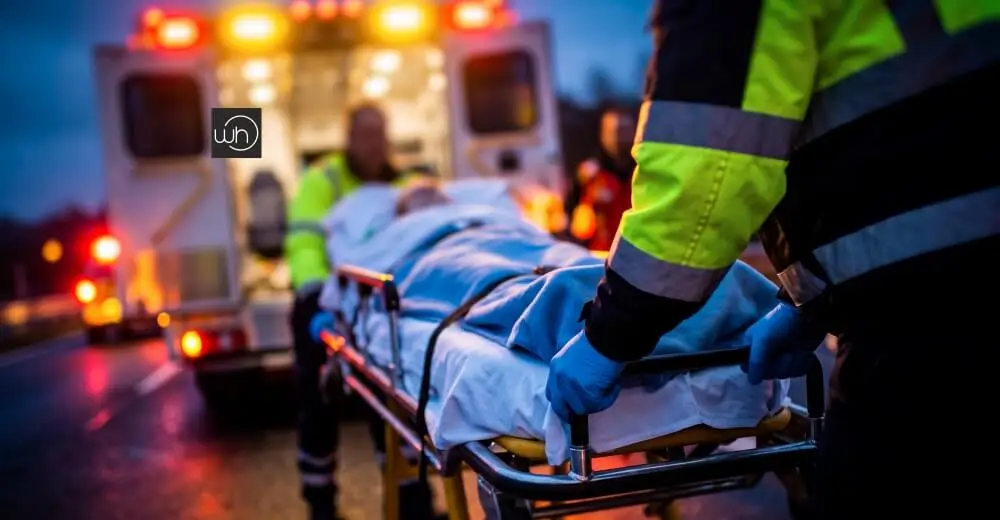
Business professionals were moving between countries and continents. When a medical emergency occurred, excellent local treatment did not always solve the larger problem. A patient might be stabilized hundreds or thousands of miles from home, while a spouse or family member tried to navigate medical clearances, hospital communication, aircraft availability, and ground transportation.
He understood that this was not merely a travel inconvenience. It was a continuity-of-care challenge. Returning a patient home safely required clinical judgment, operational discipline, and empathy working in concert. SkyMed was developed to bring those elements together under one coordinated process.
Rather than viewing transportation as the final step after treatment, Klein framed it as part of the care continuum. That perspective shaped an organization designed to communicate with hospitals, physicians, medical transport providers, and families while managing the complex details behind the scenes.
The goal was not simply to arrange movement from one location to another. It was to restore a sense of direction and control at a time when members often felt they had lost both.
As he emphasizes, “Continuity of care: A safe transition home can reconnect patients with familiar physicians, caregivers and support systems.”
This principle remains central to the way SkyMed approaches its role. Medical transportation is not treated as an isolated service but as a bridge connecting patients to the people, places, and systems that form part of their ongoing care.
Putting the Member at the Center
Vulnerable moments of life can leave patients and their families waiting for clarity, reassurance, and a path forward. For Klein, that reality has made member-centered leadership more than a business philosophy. It is a responsibility.
Klein’s leadership philosophy has never been limited to organizational growth. It is rooted in culture: every decision begins with the member’s needs. That principle influences how SkyMed communicates, coordinates, and responds.
Behind each service is a network of people managing medical information, transportation requirements, facility-to-facility communication, and family updates. Klein’s expectation is that operational precision and human compassion remain inseparable. The process must work, but it must also feel personal.
This approach has helped SkyMed develop a service culture in which members are not reduced to case numbers. Each situation is considered individually, with attention to the patient’s condition, the family’s circumstances, and the practical requirements of a safe transition.
For Klein, leadership means maintaining that focus even as the organization grows and technology changes. Systems can improve speed and visibility, but they do not replace judgment, accountability, or empathy.
The organization’s 24/SEVEN/365 response model reflects this philosophy. Medical emergencies do not occur on a convenient schedule, and families need access to knowledgeable support when uncertainty is at its highest.
By treating responsiveness as both an operational responsibility and a human commitment, Klein has positioned SkyMed around a simple promise: members will have an experienced team helping them understand what comes next.
Building a Bridge Between Healthcare Systems
Medical transportation is rarely a single transaction. It can require communication among attending physicians, receiving facilities, case managers, medical crews, aviation providers, ground teams, and family members. SkyMed’s role is to connect those moving parts into a coherent process.
Klein has long viewed this integration as a form of healthcare innovation. The value lies not only in the aircraft or technology, but in creating clarity across multiple systems.
When coordination is handled well, clinicians can focus on care, families have a trusted point of contact, and patients experience a safer, more orderly transition.
This perspective places coordination at the heart of SkyMed’s approach. The organization works across multiple participants in a medical transportation journey, helping ensure that the different requirements involved in a transfer are understood and managed as part of one connected process.
At its core, the objective is straightforward: bring clinical alignment, operational precision, and human reassurance together when they matter most.
Innovation Beyond Technology
Technology plays an important role in modern medical transportation, but Klein believes, “Innovation must ultimately improve the human experience.” A more advanced system has little value if patients and families remain confused, unsupported, or unable to understand the next step.
SkyMed continues to strengthen its communication and coordination capabilities so that critical information can move efficiently among the people responsible for a member’s care. The objective is not complexity for its own sake. It is to make a complicated process feel manageable.
This approach begins with clinical alignment. Transportation decisions must reflect the patient’s medical condition and the requirements of both sending and receiving facilities.
It also depends on operational precision. Medical clearances, transportation resources, and timing must be coordinated with disciplined attention to detail.
And equally important is human reassurance. Families need clear communication, accountability, and a knowledgeable point of contact during moments of uncertainty.
Together, these elements demonstrate how Klein understands innovation. It is not simply about introducing new technology. It is about improving the experience around the emergency and ensuring that every part of the process supports the member.
This is where Klein’s vision remains distinctive. The organization does not define success solely by the completion of a transport. Success is also measured by whether the member felt heard, whether the family understood the process, and whether the transition supported continuity of care.
In an era increasingly shaped by automation, Klein continues to emphasize the importance of experienced people making responsible decisions. Technology can connect the process. Human judgment gives it meaning.
Leadership That Extends Beyond One Generation
Klein’s enduring contribution is not simply the organization he built, but the service philosophy he embedded within it. Compassion and operational excellence are expected to reinforce one another.
That philosophy has shaped teams, partnerships, and future leaders across SkyMed. It asks every person involved in a member’s journey to understand the larger purpose behind the work: restoring confidence, supporting continuity, and helping people return to the lives they know.
This understanding of leadership places service at the center of organizational culture. The quality of a medical transportation experience depends not only on systems and resources but also on the people responsible for communicating, coordinating, and making decisions throughout the journey.
For Klein, maintaining that standard requires consistency. As the organization develops, the fundamental commitment to members remains unchanged.
The result is a leadership philosophy in which growth is not separated from responsibility. Operational excellence has meaning because it serves people, while compassion becomes more effective when supported by disciplined processes.
The Future of Connected Care
As global mobility increases and healthcare becomes more specialized, Klein sees medical transportation playing a more visible role in the continuum of care. The future will require stronger collaboration among providers, better communication across borders, and systems that give patients greater clarity during transitions.
His vision for SkyMed remains grounded in the same principle that shaped its beginning: the most advanced process is the one that helps people feel less alone. Growth, technology, and global reach matter, but they must always serve the patient.
This perspective becomes particularly important as people continue to travel, live, work, and retire across borders. A healthcare emergency away from home can involve multiple providers, locations, and decisions. In such moments, coordination becomes essential to ensuring that the patient and family have a clear path forward.
SkyMed’s role is therefore built around more than medical transportation. It is about helping members navigate a difficult transition with experienced support, while maintaining the connection between the patient, their healthcare providers, their families, and their home.
The philosophy remains deliberately human. Technology can make processes faster. Systems can improve visibility. Coordination can reduce complexity. But the ultimate purpose is to help people through one of the most vulnerable moments of their lives.
A Legacy of Service
The story of SkyMed under Will Klein is ultimately a story about recognizing that healthcare does not stop at the hospital door. For a patient far from home, recovery can also mean returning to familiar physicians, caregivers, family members, and support systems.
Klein’s vision has been shaped around that understanding. By bringing medical judgment, operational discipline, coordination, and empathy together, he has positioned medical transportation as an important part of the broader care continuum.
The guiding question remains simple, yet powerful: What is best for the member?
It provides a clear standard for decision-making and keeps the organization connected to the people it serves. It also reflects Klein’s broader understanding of leadership, that meaningful innovation must ultimately improve lives.
As SkyMed looks toward the future, the same philosophy continues to provide direction. The organization can embrace technology, strengthen coordination, and respond to an increasingly connected world while preserving the human element that gives its work meaning.
For Klein, “True healthcare leadership is measured not only by innovation, but by the lives improved through service, compassion and an unwavering commitment to putting people first.”
That philosophy remains at the heart of SkyMed Group of Companies: emergency travel and medical transportation membership services built around coordinated response, continuity of care, and the commitment to help members return home.
Editorial & Photography Researched and Produced by Neil Precourt, Director of SkyMed Graphic & Digital Services.