Not long ago, a patient in a rural village had two options when they fell seriously ill. Travel hours to the nearest hospital, often at high cost and physical hardship. Or wait, hope, and manage as best they could. For millions of people around the world, that was not a healthcare choice. It was a lottery. Healthcare technology is what changed that equation.
That gap has not disappeared. But it is narrowing faster than at any point in history. The tools available to doctors, hospitals, and health systems today bear almost no resemblance to what existed even two decades ago. Diagnoses that once took weeks now take hours. Treatments that required lengthy hospital stays now happen outpatient. Monitoring that once confined patients to beds now fits on a wrist. The force behind all of this is healthcare technology, and its pace of change shows no sign of slowing.
This blog discusses what is healthcare technology, what it looks like across different areas of medicine today, and what the future of healthcare technology holds for patients and providers around the world.
What Is Healthcare Technology
Understanding what is healthcare technology starts with recognising how broad the term actually is. It covers every tool, system, device, and process that uses technology to deliver, improve, or support healthcare.
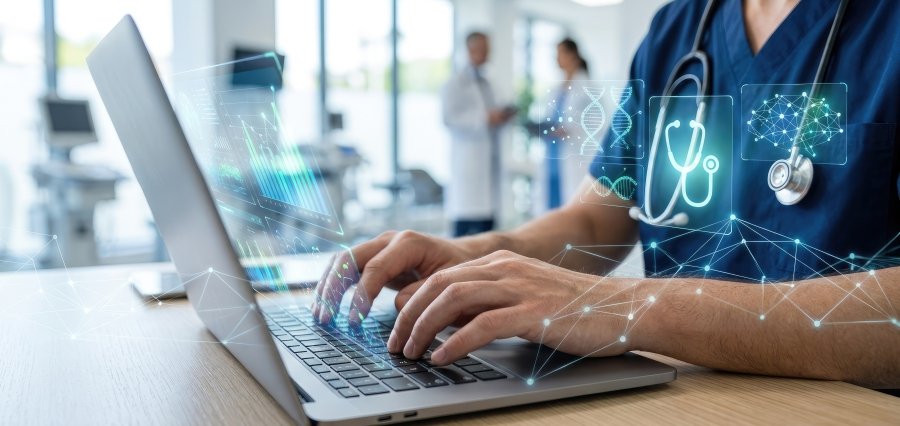
It includes medical equipment such as magnetic resonance imaging machines and robotic surgery. It includes digital health technologies such as electronic health records and telehealth software. It includes AI that can analyze medical imaging, predict patient deterioration and adverse reactions to certain drugs. It includes wearable technology that monitors heart rhythm, blood oxygen saturation and glucose levels at all times. It includes genome sequencing tools that help to tailor cancer treatment according to patients’ DNA.
Healthcare technology is not one thing. It is the sum of every technological innovation applied to the challenge of keeping people healthy and treating them when they are not.
Where It Is Making the Biggest Difference Right Now
Artificial Intelligence in Diagnosis
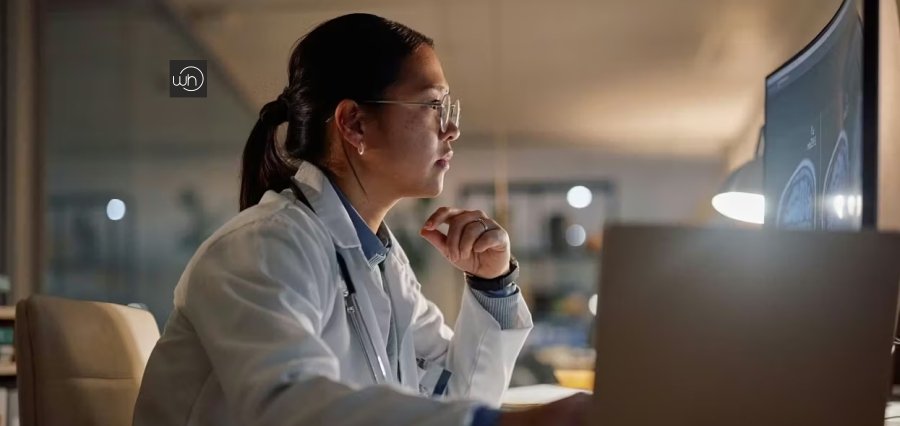
AI is changing how diseases are detected. This is one of the clearest answers to what is healthcare technology doing for clinical practice today. Systems trained on millions of medical images can now identify early-stage cancers, diabetic retinopathy, and cardiac abnormalities with accuracy that matches or exceeds experienced specialists. The speed is remarkable. What once required a radiologist to spend hours reviewing scans can now be flagged within minutes.
This matters most in settings where specialist access is limited. AI-powered diagnostic tools are extending specialist-level analysis to hospitals and clinics that could never otherwise afford or attract that expertise.
Telemedicine and Remote Care
Healthcare technology has made geography significantly less relevant to the quality of care a person can receive. Telemedicine systems link patients with doctors all over the world. Remote monitoring tools enable cardiologists to monitor the heart rhythm of the patient from hundreds of miles away. Remote mental health programs provide patients with the opportunity for therapy regardless of the limitations on transportation, waiting in a waiting room, or fear of stigma.
However, the transition took an even larger step forward in the context of the global health crisis that emerged recently, and it did not reverse after this period. The patients were provided with the opportunities offered by remote health care and decided to continue its use.
Electronic Health Records and Data Integration
The transition from the paper-based record-keeping system to the digital has changed how patients’ data are stored and used. The physician is now able to have all necessary patient data, including his or her medical history, list of medications, allergies, etc., in seconds. This is healthcare technology doing something deceptively simple but genuinely transformative.
Surgical Robotics
Surgical robots enable surgeons to operate on patients in a more accurate manner, with smaller incisions, and faster postoperative recovery compared to traditional surgery. Technologies such as the da Vinci Surgical System are already used in millions of surgeries in the world. Healthcare technology in the operating room has moved from assistance to precision at a level surgeons could not achieve alone.
Wearable Devices and Continuous Monitoring
Current consumer-level wearables are equipped with clinical-grade monitoring tools. Smartwatches are capable of detecting an abnormal heart rate and prompting the user to consult a physician. Continuous glucose monitoring is available for diabetic individuals to measure blood sugar levels continuously without the need for finger pricking. Implantable devices can monitor heart activity and share that information with the physician.
It is the adoption of continuous, non-invasive monitoring that stands out as one of the most important innovations that health technologies have made. This shift is a strong example of what is healthcare technology delivering at a genuinely personal level.
The Challenges That Come With Progress
Healthcare technology brings genuine complexity alongside its benefits.
Data privacy is a serious concern. The digitisation of health information creates enormous value but also significant risk. Patient data is among the most sensitive personal information that exists, and health systems are among the most targeted by cybercriminals. Robust security frameworks and regulatory compliance are not optional. They are fundamental to public trust.
Equity is another challenge. Advanced healthcare technology tends to reach well-resourced health systems first. The gap between what is available in a leading urban hospital and what is accessible in a rural clinic can be significant. Closing that gap requires deliberate policy effort and investment, not just technological advancement.
Clinician adoption takes time. New technology, however capable, only delivers value when the people using it trust it and know how to use it well. Training, change management, and clinical validation are as important as the technology itself.
The Future of Healthcare Technology
The future of healthcare technology looks like something that will be more personalized, predictive, and interconnected than any technology we have seen up till now.
Genomics will give rise to treatment options that will target your personal body rather than the general average of the population. AI will not just help in diagnosis but will become predictive and provide guidance to the medical practitioner on how to treat the patient.
Another aspect of the future of healthcare technology is the place where the treatment will take place. The hospital will continue to perform the functions of carrying out complex operations and other acute procedures. But more and more of medicine will move into homes, communities, and devices. The patient will become an active participant in their own health management rather than a passive recipient of periodic clinical attention.
Conclusion: Technology in Service of the Human
Healthcare technology will not replace the human elements that make medicine what it is. The judgment of an experienced clinician. The relationship between a patient and a doctor who knows them well. The compassion that no algorithm can replicate. What it will do, and is already doing, is make those human elements more powerful, more informed, and more widely accessible than ever before. For a world still working to ensure that quality care reaches everyone who needs it, that is not a small thing. It is the whole point. And the future of healthcare technology, at its best, is simply more of that, delivered to more people, more effectively than before.