Future Transport Innovation
Getting a patient from the point of injury to appropriate care in time has long been one of medicine’s toughest logistical challenges. Roads become blocked, distances stretch beyond reach, and every lost minute can alter an outcome. This is where aviation healthcare innovation has quietly become one of the more significant forces shaping modern medicine. By pairing medical expertise with advances in flight technology, hospitals and emergency services have found new ways to close the gap between injury and treatment, particularly in areas that ground transport cannot reach quickly enough.
Why Speed Remains the Priority
In emergency medicine, time works against nearly everyone involved. The difference between a favorable outcome and a poor one often comes down to how quickly a patient reaches proper care. Traditional transport methods hold up well in cities with short distances and clear roads, but they fall short in remote regions, during severe weather, or when traffic makes every route unpredictable. Advances tied to aviation healthcare innovation have helped close that gap, giving medical teams a faster, more dependable way to reach patients who would otherwise face long delays.
Redesigning the Aircraft Itself
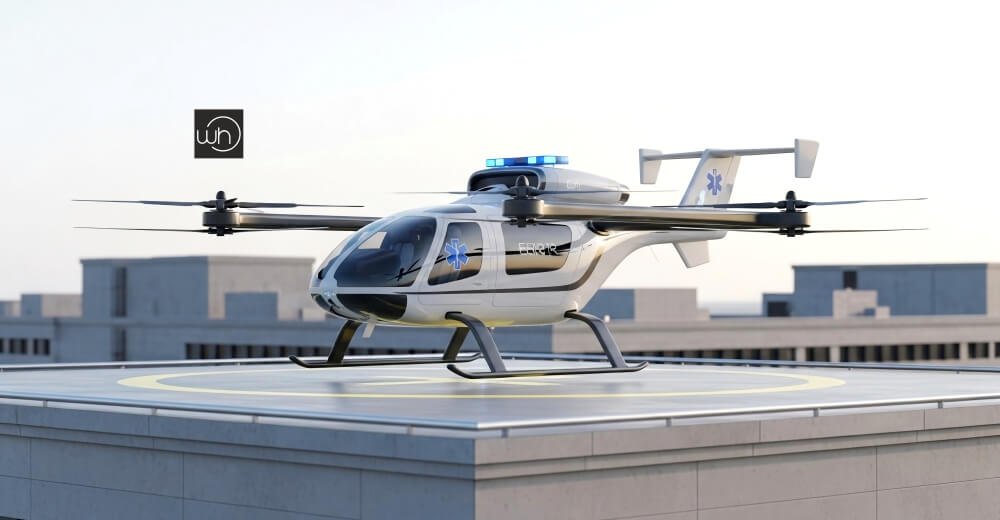
Medical transport aircraft were once little more than a plane or helicopter fitted with basic equipment. That has changed considerably. Aircraft built specifically for medical use now come with better stabilization, quieter cabins, and equipment designed for in flight treatment rather than adapted from ground ambulances. These design changes matter because a patient’s condition can shift during transport, and onboard crews need tools that hold up reliably at altitude and under vibration. This deliberate redesign sits at the center of aviation healthcare innovation, turning the aircraft from a simple vehicle into an active part of the treatment process.
Integrated Communication in Aviation Healthcare
Getting a patient airborne is only part of the challenge. What happens before takeoff and after landing carries just as much weight. Better communication systems now let flight crews share real time patient information with hospitals in advance, so receiving teams are ready the moment the aircraft lands. Ground crews and flight crews are also working more closely together during handoffs, cutting down the small delays that used to slow the process. This tighter coordination is another dimension of aviation healthcare innovation, one focused less on the aircraft and more on the systems that support it.
Reaching Places Ground Transport Cannot
Some of the clearest benefits show up in areas that are genuinely hard to reach. Rural regions, mountainous terrain, and locations cut off during natural disasters often depend entirely on air transport for timely medical care. Without it, patients in these areas could face delays that ground vehicles simply cannot prevent. Continued investment in aviation healthcare innovation has made it possible to extend specialized care to places that once had little realistic access to it, narrowing the divide between rural and urban healthcare outcomes in a way that was not achievable before.
Preparing Crews for a Distinct Discipline
Treating a critically ill patient in flight demands a different skill set than working inside a hospital. Cabin pressure, limited space and constant motion change how procedures must be performed. Training programs for flight medical crews have grown a great deal, with a sharper focus on the specific demands of treating patients mid flight rather than just applying standard hospital protocols. This growing emphasis on specialized training shows how seriously the field now takes the human side of aviation healthcare innovation, recognizing that even the best aircraft and equipment accomplish little without crews who know how to use them well.
Challenges That Still Require Attention
There are still real obstacles here. The cost of advanced medical aircraft is high, and not every region has equal access to them or to crews trained to work on board. Bad weather can shut down flights right when they’re needed the most. Hospitals and emergency services don’t always follow the same protocols either, which makes coordination messy at times. None of that erases what’s already been achieved, but it does show that bringing aviation healthcare innovation to every corner of the healthcare system will take money, time, and a lot of cooperation.
In Summary
The overall direction is unmistakable even as the pace varies by region. Hospitals, emergency services and aviation companies are working together more than they used to, treating medical air transport as a core part of healthcare infrastructure instead of something reserved for extreme cases only. As technology keeps advancing and training programs keep growing, this field looks set to become a more central piece of how emergency and specialized care reaches patients, wherever they happen to be when they need help most.