Innovation in Action
In 2026, health is being remade by technologies that are both daring and imaginative. AI and telemedicine top the list of ways in which the future will speed up, smarten, and make more accessible the business of healthcare. New digital health trailblazers 2026 are changing the way patients receive care, doctors make decisions, and health systems around the world function.
AI – Healthcare’s Game Changer
The world of medicine is no longer one of the areas that artificial intelligence does not play an active role within, where concepts of medicine are far-off, which artificial intelligence does not work to enhance. Based on artificial intelligence, the analyzing of medical images with a speed and accuracy that was unthought-of is now able to help radiologists identify tumors, fractures, or abnormalities far before hand. Predictive analytics through artificial intelligence helps the path-breakers of digital health trailblazers 2026 to foresee the chances of a patient acquiring chronic diseases so that preventive measures can be taken before the problem worsens.
AI is also strengthening the process of decision-making in hospitals. Machine learning models are able to process a great volume of patient data to suggest personalized treatment plans, recommend medications, and flag possible complications. This reduces human error, wherein patients would get generalized care for their conditions. Further still, AI’s use extends into peripheral sectors into areas like mental health, where chatbots and virtual assistants provide support, track symptoms, and guide patients to appropriate care.
Telemedicine: Bringing Care to Your Doorstep
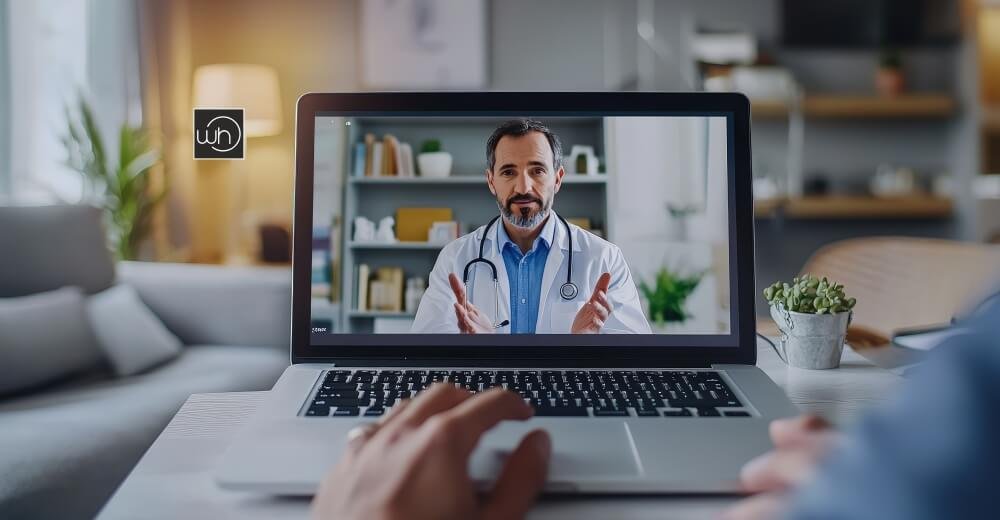
Telemedicine, which was considered a luxury, is no longer a new phenomenon in healthcare services. Virtual care visits, telemonitoring systems, as well as mobile healthcare applications, enable people to access digital health trailblazers 2026 all over the world. This technology has not only made healthcare services easier but also made it available to all people, particularly those living in remote regions.
Remote monitoring systems have also enabled patients to take control of their health. With the use of blood pressure monitors, heart rate monitors, glucose level monitors, and sleep stage monitors, patients can be remotely monitored by the doctor and treatment plans changed for improved health outcomes and to prevent complications from arising before hospitalization. Telemedicine has brought healthcare from treatment to preventive healthcare, and this is now achievable through telemedicine systems.
Trailblazers Leading the Way
The digital health trailblazers 2026 are experiencing the changing of the way the future of medicine can unfold. Startups and corporations are working on AI-powered diagnosis platforms and remote surgery systems. All these innovations are closing the gap between technology and patient-centric approaches and proving that technology can still have a human touch.
It also believes that the key to all this success has been collaboration. Technological companies are coming together in partnerships with hospitals, research organizations, as well as insurance companies, to build a comprehensive healthcare ecosystem. This is paving the way for the use of AI, as well as telehealth, while also being able to ensure that the solutions that are being developed are meeting the standards in healthcare. For instance, there is AI that is able to view an X-ray in seconds, while there are telehealth platforms that have access to specialists all around the clock.
Challenges and Opportunities
Although much progress is being made, some problems are being encountered, some of which are: The biggest problems being faced relative to their use pertain to data protection and security, specifically in a field like healthcare where digital technologies are being widely applied. The need to protect patient information is vital, as it is extremely sensitive. Then, of course, are problems pertaining to matters like ethics, as may be encountered with AI technologies where one must ensure.
And equitable access is of course an important consideration too. In this regard, although city dwellers get access to high-tech telemedicine facilities, for instance, rural and poor people may lack access to internet connectivity or the hardware required for equitable access to the benefits of new health technologies brought forth by innovations in digital health. Pioneers are also working hard on these challenges.
Looking Ahead
The emergence of digital health trailblazers 2026 provides evidence that the future of healthcare is intelligent, interconnected, and patient-centric. AI and telemedicine are no longer realities to be tested; instead, they are now an integral part of healthcare facilities. The advancements taking place are well on their way to making a healthcare system which will be predictive instead of reactive, easy to access instead of difficult, and inclusive instead of exclusive.
Moving forward, the coming together of technology and healthcare is going to keep expanding in capabilities and applications. With that, hospitals, clinics, and startups are going to keep on forging new frontiers with innovative solutions that benefit healthcare on several levels – better healthcare outcomes, more efficient healthcare processes, and widespread healthcare access worldwide on all fronts.