Prime Highlights
- Karolinska Institutet joins EU health crisis dialogue as only Swedish representative.
- Talks focus on vaccines, medicines, and Europe’s medical countermeasure strategy.
Key Facts
- Centre for Health Crises invited through EU’s HERA preparedness authority.
- Discussion to shape key recommendations for European Commission health policy.
Background
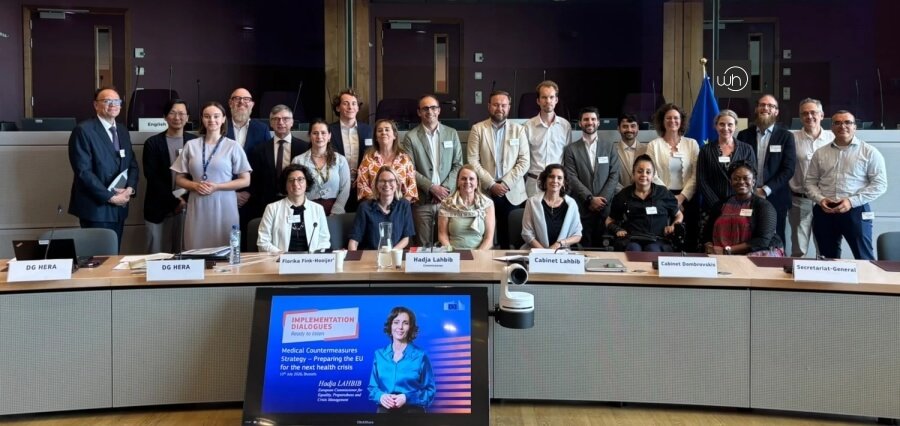
The Centre for Health Crises at Karolinska Institutet took part in the European Commission’s Implementation Dialogue on health crisis preparedness in early July, represented by Maja Fjaestad.
The high-level meeting, led by Commissioner Hadja Lahbib, who oversees crisis preparedness, brought together around 20 European stakeholders from academia, civil society, industry, and the public sector to discuss how the European Union can strengthen its readiness for future health emergencies.
Karolinska Institutet attended through the Centre for Health Crises as the only Swedish participant and the sole university represented at the meeting. The Centre received its invitation through the Health Emergency Preparedness and Response Authority, an organisation it had engaged with previously.
Discussions centred on the European Union’s strategy for medical countermeasures, covering vaccines, medicines, diagnostics, protective equipment, and other tools needed to prevent, detect, and manage serious health threats.
Participants explored ways Europe could detect emerging threats earlier, speed up the development of vaccines and treatments, secure production capacity within the region, and improve stockpiling along with joint procurement efforts.
During the session, Maja Fjaestad, expert coordinator at the Centre for Health Crises and strategic management adviser for community relations at Karolinska Institutet, offered views shaped by her work in research, preparedness, and policy.
She said Europe’s medical countermeasure strategy must rest on solid science and closer ties between research bodies, healthcare systems, and public authorities, adding that health crises always reflect the vulnerabilities already present in society.