Heart medicine has come a long way in recent years. New treatments are helping people live longer and feel better. Still, heart failure remains a big challenge. It’s not just about the heart; it affects energy, daily life, and the people around patients. Families feel it, doctors feel it, hospitals feel it. Even with the latest drugs and technology, it can hit hard, and managing it is anything but simple.
It is within this context that some cardiologists are trying to do things differently. These doctors see the bigger picture. They focus not only on treating heart failure itself but also on ensuring that care is organized, coordinated, and consistent, addressing the full spectrum of patient needs.
In Belgium, the Belgian Working Group on Heart Failure (BWGHF), a part of the Belgian Society of Cardiology (BSC), has been striving to improve heart failure care nationwide for over 20 years. Heart failure cardiologists from across the country joined forces for this. This led to the launch of an online multidisciplinary heart failure care pathway (heartfailurepathway.com) in November 2024.
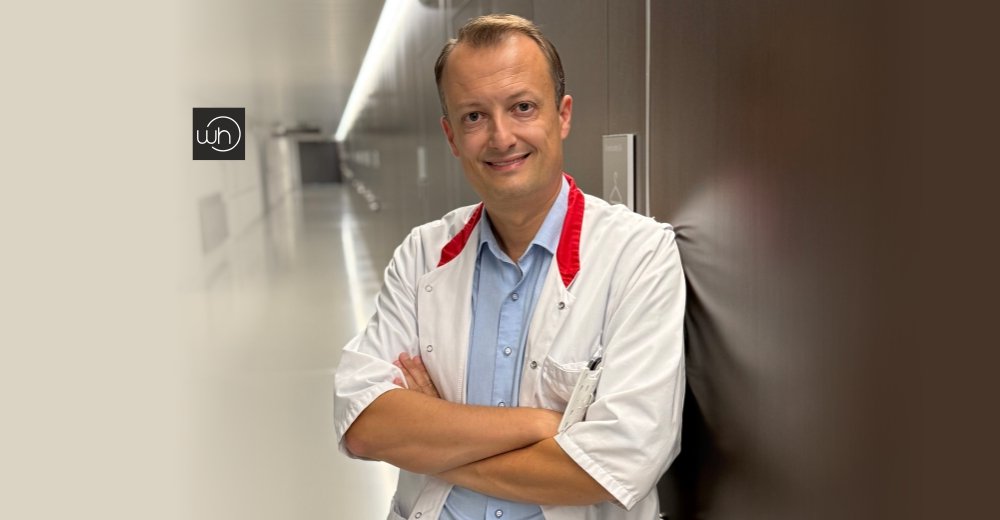
Leading the charge is Dr. David Derthoo, a Cardiologist who cares deeply about improving life for people with heart failure. He and his colleagues set up this care pathway, a platform that helps patients and healthcare professionals navigate care more easily. This initiative is an important milestone for heart care in Belgium and a valuable resource worldwide.
Let’s explore how Dr. Derthoo is bridging the gap between guidelines and real-world heart care!
Academic Foundation and Early Career Path
Dr. Derthoo’s journey into medicine began at the Catholic University of Leuven, where he laid the foundation for what would become a deeply committed career. He studied medicine there and went on to graduate as a cardiologist in 2012. His curiosity and drive did not stop at that milestone. Recognizing the importance of specialization, he pursued additional training in cardiac rehabilitation and heart failure before beginning his tenure at AZ Groeninge Hospital in Kortrijk at the end of 2013.
Reflecting on what drew him specifically to heart failure, he notes that “my passion for heart failure arose from my interest in the hemodynamic processes determined by the interplay of myocardial function, heart valves, cardiac rhythm, and coronary perfusion, along with the interaction of cardiac function with other organs such as the kidneys and liver.” This complexity, he explains, ensures that the work of a heart failure specialist always intersects with broader aspects of internal medicine.
The Vital Role of Guideline Implementation
For Dr. Derthoo, the role of a cardiologist extends beyond technical mastery in diagnosis and treatment. He stresses that “as a cardiologist, it is of course extremely important to provide patients with the best possible care in your own hospital and to strive for maximum implementation of international guidelines.” In Belgium, this means aligning with the directives of the European Society of Cardiology (ESC), ensuring that patients benefit from globally recognized best practices.
Yet his vision reaches beyond the boundaries of a single hospital. He highlights the importance of collaboration between institutions: “It is also important to collaborate with other hospitals to share expertise and to conduct more national projects to improve heart failure care at the national level.” This collaborative spirit inspired him to join the Belgian Working Group on Heart Failure.
Understanding the Challenge of Heart Failure
Heart failure is not simply one disease—it is an intricate spectrum of conditions with different causes, mechanisms, and treatment pathways. The prevalence of heart failure continues to rise globally, posing challenges for patients and health systems alike. Dr. Derthoo explains why heart failure is so important and complex: “Heart failure is usually a chronic condition. This disease leads to fluid retention, reduced exercise capacity, cardiac arrhythmias, reduced quality of life, hospitalizations, and sometimes a poor prognosis, which can be as bad as that of certain malignancies.”
Unlike many conditions that can be managed with a straightforward approach, heart failure requires nuanced differentiation. Different subtypes demand tailored diagnostic processes and therapies. Meanwhile, the last decade has seen an explosion of treatment innovations—from new classes of drugs such as ARNIs and SGLT-2 inhibitors, to device-based therapies like MitraClip, TAVI, and advanced pacing techniques. The sheer number of possibilities makes the treatment landscape both hopeful and daunting.
Complexity in Clinical Reality
Despite the promise of modern medicine, the management of heart failure remains fraught with challenges. Hospitalizations are still common, costs continue to mount, and outcomes often fall short of what is possible. Dr. Derthoo puts it plainly: “The care of heart failure patients remains a challenge in practice.”
The complexity is compounded by the dynamic nature of the disease. Episodes of acute decompensation, arrhythmias, renal insufficiency, or electrolyte disturbances can emerge at any time. Addressing these issues demands vigilant follow-up and an appropriate timely adjustment of treatment in case of new clinical problems. Personalized medicine becomes the guiding principle, with treatment titrated according to the patient’s evolving profile.
Gaps in Therapy and Knowledge
Even with powerful tools at their disposal, healthcare providers often fall short of optimal treatment. As Dr. Derthoo observes, “real-world data show a suboptimal implementation of international guidelines.” Too often, life-saving medications are either not prescribed, under-dosed, or prematurely discontinued. Some clinicians hesitate due to concerns over side effects such as hypotension or renal decline. Others, lacking the most up-to-date knowledge, may inadvertently deprive patients of therapies that could extend life and reduce hospitalizations.
Compounding this is the fragmented nature of heart failure care. Cardiologists are not the only physicians treating these patients. General practitioners, geriatricians, nephrologists, pulmonologists, intensivists and others all play a role. Everyone must follow the same guidelines. Everyone should know what to look for, what to do, what advice to give and so on.
At home, patients should monitor themselves, together with their family and environment, with support from nurses, pharmacists, physiotherapists, dieticians and, if necessary, psychologists. But without consistent guidance, patients sometimes receive conflicting advice. “Heart failure patients sometimes lack sufficient knowledge of the warning symptoms to look out for and how to live with heart failure,” he stresses. Sometimes, this leads to delayed help seeking, or unfortunate mistakes are made regarding medication, lifestyle, etc.
Education of all healthcare providers involved as well as patients, therefore, is not optional—it is essential to offer the patient the best possible treatment and prognosis.
Translating Guidelines into Practice
The international guidelines form the foundation of our daily practices. However, these texts are long and written in dense, specialist-focused language. This makes them less user-friendly. They may not reach non-cardiologists in time, and for nurses or pharmacists, practical guidance is often lacking altogether. “The international guidelines for heart failure were written by cardiologists for cardiologists,” Dr. Derthoo explains, highlighting why a practical translation is necessary. Healthcare professionals across the spectrum need quick access to concise, actionable information. Patients, too, require education tailored to their needs, empowering them to monitor their symptoms and act promptly when problems arise. Without such resources, even the best science remains underutilized in the real world.
Follow-Up: The Weak Link
Another challenge lies in continuity of care. Many patients see their cardiologist only a few times per year, leaving significant gaps during which their condition may worsen unnoticed. If deterioration is not detected early, hospitalizations become inevitable. As Dr. Derthoo emphasizes, “good follow-up at home is therefore crucial.”
The STRONG-HF trial has shown that intensive monitoring and frequent follow-ups improve outcomes significantly. Yet in Belgium, the availability of heart failure clinics, nurses, and telemonitoring systems remains uneven. Without standardized care pathways and adequate funding, variability persists from one hospital to another, creating inequities in patient care.
Building a Multidisciplinary Online Pathway
In response to these systemic gaps, Dr. Derthoo spearheaded the creation of an innovative solution. In May 2017, he launched a locoregional transmural heart failure care pathway in West Flanders. This initiative grew rapidly, and with the advent of updated ESC guidelines in 2021 and 2023, it evolved into something much larger: a multilingual online platform, accessible worldwide, under the banner heartfailurepathway.com.
This website offers practical, constantly updated resources in Dutch, French, and English. It was developed collaboratively with general practitioners, nurses, pharmacists, and other stakeholders, and now serves as a central reference point for everyone involved in heart failure care. From diagnosis and treatment to monitoring and emergency management, the platform provides structured guidance for diverse audiences.
Dedicated sections for general practitioners, nurses, pharmacists, and patients ensure that advice is tailored to each role. For example, flowcharts help GPs titrate medications safely, while patient resources explain in plain language how to recognize danger signs and live with the condition.
Bridging National and International Needs
While some aspects of the platform are specific to Belgium, such as reimbursement criteria, the majority of content is universally applicable. Because it is multilingual, the pathway is increasingly being adopted outside Belgium, demonstrating its global relevance.
“Our aim,” Dr. Derthoo explains, “is to create an online platform where everyone involved with patients with heart failure can find up-to-date information, practical advice, the tasks of all persons involved and a proposal to organize the follow-up of these patients.” By bringing everyone into alignment, the care pathway hopes to improve the consistency and quality of care, to reduce hospitalizations, and ultimately to improve survival.
The Team Behind the Pathway
The creation and success of heartfailurepathway.com is the result of a remarkable multidisciplinary collaboration within the Belgian Working Group on Heart Failure (BWGHF). Each contributor brings unique expertise, vision, and dedication to improving the quality and consistency of heart failure care across Belgium and beyond.
Dr. Delphine Vervloet: Driving Standardization and Multidisciplinary Care
Affiliated with the Cardiology Department at AZ Maria Middelares Hospital in Ghent since 2016, Dr. Delphine Vervloet has been instrumental in shaping the BWGHF heart failure care pathway. She studied medicine at the University of Ghent and completed the Postgraduate Course in Heart Failure at the University of Zürich in 2017. Her passion for patient-centered, multidisciplinary care led her to champion the standardization of heart failure management across Belgium.
During the development of the online pathway, she and her colleague Dr. Caroline Weytjens identified significant variation between hospitals, each with its own materials and practices. Their vision was to unify and optimize care by ensuring that every healthcare professional, from general practitioners to nurses, worked from the same evidence-based framework.
This insight helped inspire the national initiative led by Dr. Derthoo, transforming regional best practices into a fully integrated, multilingual platform. For Dr. Vervloet, the project’s success lies in its tangible impact: healthcare teams now have practical, harmonized tools to guide patient care, and the enthusiasm among clinicians reflects its value. Teamwork makes the dream work. She continues to advocate for government support and reimbursement for essential services such as heart failure nursing and NT-proBNP testing—vital steps toward ensuring equitable, optimal care for every patient in Belgium.
Dr. Ana Roussoulières: Championing Policy and Global Collaboration
As the current President of the BWGHF and since 2015 Professor of Cardiology at the Hôpital Erasme in Brussels (Université Libre de Bruxelles), Dr. Ana Roussoulières brings nearly three decades of experience in advanced heart failure, transplantation, and mechanical circulatory support. She studied medicine in Brazil, after which she completed her training in advanced heart failure in Paris and Lyon.
Under her guidance, the BWGHF continues to promote the implementation of international heart failure guidelines across Belgium, exemplified by the launch of the heartfailurepathway.com platform in 2024. Available in French, English, and Dutch, this tool provides accessible, high-quality information for patients, families, and professionals alike, helping bridge the gap between science and daily care.
Dr. Roussoulières also engages with health authorities and policymakers, advocating for initiatives that improve patient outcomes and system efficiency. A key focus of her presidency is the reimbursement of NT-proBNP testing, an essential diagnostic and prognostic tool currently not covered in Belgium. Through her efforts, the BWGHF is reinforcing awareness of heart failure among clinicians, policymakers, and the public, ensuring that prevention, diagnosis, and treatment remain national priorities.
Dr. Philippe Timmermans: Shaping the Future of Heart Failure Care
Dr. Philippe Timmermans, affiliated with the Jessa Hospital in Hasselt since 2015, will soon assume the presidency of the BWGHF. He studied medicine at the University of Leuven and completed the Postgraduate Course in Heart Failure at the University of Zürich in 2014. Having played an essential role in developing and promoting the national care pathway, he now focuses on its full integration into daily practice.
He envisions a future where every cardiology practice in Belgium whether hospital-based or ambulatory, actively implements the national pathway to ensure consistency and excellence in care. For Dr. Timmermans, education is key: by empowering healthcare professionals to apply the guidelines confidently, the pathway can become a foundation for ongoing quality improvement.
He also identifies several frontiers for progress, including acute heart failure management, precision medicine, and the integration of new evidence into national best practices. Crucially, he emphasizes the need for systemic policy change to establish and fund dedicated heart failure nurses in every cardiology department, a cornerstone for sustainable, patient-centered care.
With this vision, Dr. Timmermans aims to lead the BWGHF into a new era of coordinated, evidence-based, and equitable heart failure management.
Additional Contributors
The pathway project also benefitted from the expertise and commitment of many other professionals dedicated to improving heart failure care nationwide, including:
Dr. Matthias Dupont, East Limburg Hospital (ZOL), Genk
Dr. Petra Nijst, East Limburg Hospital (ZOL), Genk
Dr. Miek Smeets, University of Antwerp & De Heuvel Group Practice, Boechout
Dr. Anne-Catherine Pouleur, CHU Saint-Luc (UCL), Brussels
Together, these leaders exemplify the spirit of collaboration and innovation that defines the BWGHF, uniting cardiologists, general practitioners, and allied professionals behind one shared goal: better lives for patients with heart failure.
The Imperative of Prevention
While optimizing care for existing heart failure patients is vital, Dr. Derthoo stresses that the greatest long-term gains will come from prevention. Cardiovascular risk factors such as obesity, hypertension, diabetes, and high cholesterol are the soil in which heart failure develops. “Rather than treating heart failure as effectively as possible, it is, of course, crucial to prevent it as much as possible,” he argues.
Lifestyle interventions—regular exercise, healthy eating, smoking cessation, and weight control—are powerful tools. But prevention must be embedded in society, supported by schools, policymakers, the food industry, and the media. Tackling obesity, in particular, is a priority. “Preventing obesity will therefore be enormously disease-saving and cost-effective in the long run,” he states, noting that while medications such as GLP-1 analogues offer hope, they remain expensive.
The Road Ahead
Looking forward, Dr. Derthoo sees a dual challenge: continue advancing treatments while ensuring the optimal use of what already exists. “Significant gains can still be achieved by improving the application of existing heart failure treatments in practice and by enhancing multidisciplinary collaboration around these patients so that everyone, including non-cardiologists, pursues the same guidelines and goals,” he explains.
With the BWGHF, he is committed to keeping heartfailurepathway.com up-to-date, ensuring it remains a living tool for clinicians and patients alike. But he also emphasizes the societal responsibility to prevent disease through lifestyle changes and public health initiatives.
In conclusion, the story of Dr. Derthoo’s work is one of vision, persistence, and collaboration. It is a reminder that medicine is not only about treating illness but about designing systems that enhance multidisciplinary collaboration and that sustain wellness. Through his leadership, Belgium has taken a bold step toward reshaping heart failure care—and in doing so, has offered a model the world can learn from.